Course Overview
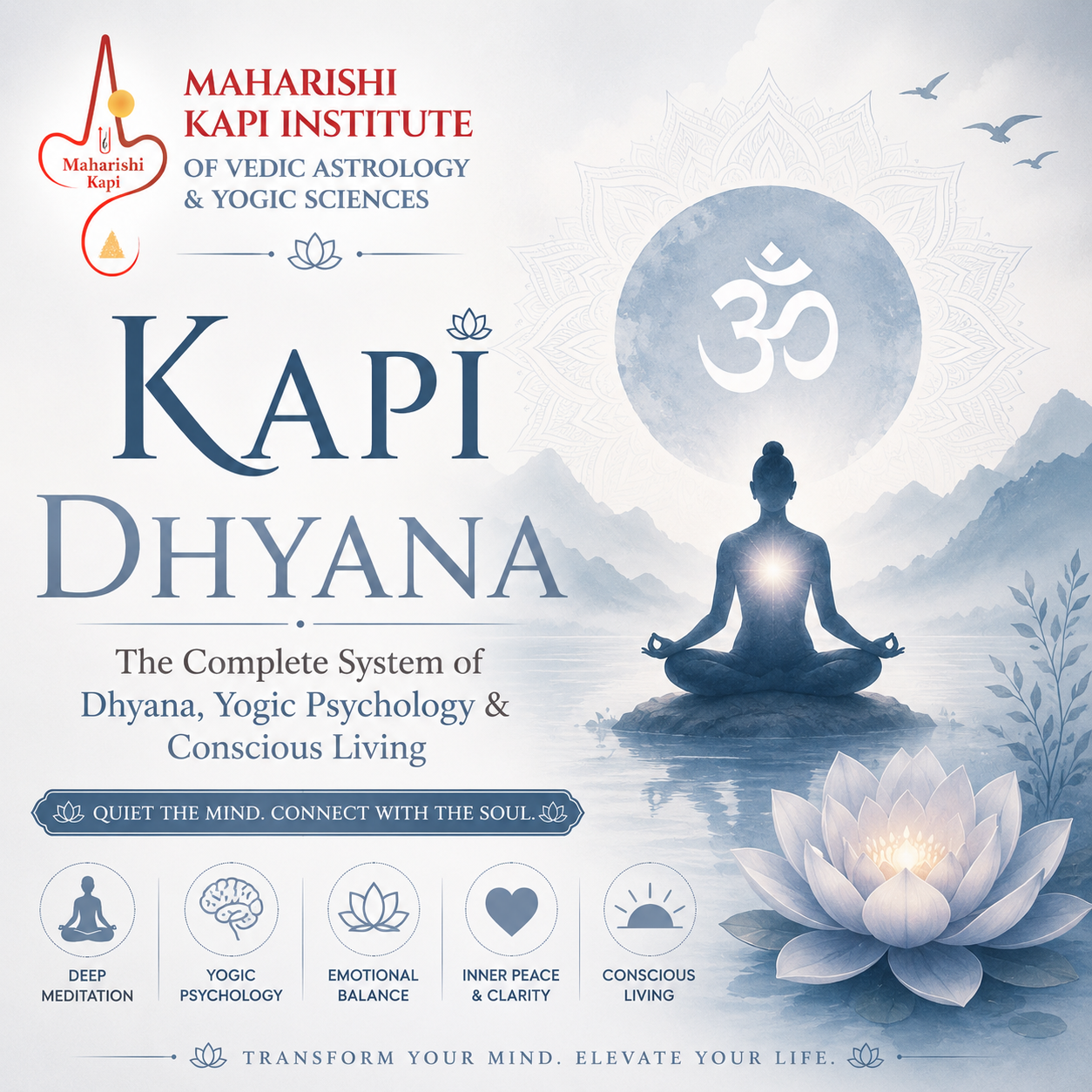
Meditation is not merely a technique for relaxation—it is a systematic science of understanding the mind, refining awareness, and awakening higher consciousness. In the Yogic tradition, Dhyana represents the culmination of disciplined living, mental purification, and sustained inner awareness. It is the bridge between concentration (Dharana) and the direct experience of profound stillness and clarity.
Kapi Dhyana is a comprehensive professional certification designed to present meditation as a complete system of inner development rather than a collection of isolated practices. Rooted in the wisdom of the Yoga Sutras of Patanjali, Bhagavad Gita, Upanishads, and classical Yogic traditions, this program integrates philosophy, psychology, breathwork, mantra, mindfulness, conscious living, and professional facilitation into one structured learning journey.
Students will understand not only how to meditate, but also why meditation works, how the mind functions, how emotions influence awareness, and how Yogic principles can be applied in everyday life. The course also develops the knowledge and confidence required to ethically guide individuals and groups in meditation practices while respecting appropriate professional boundaries.
Whether your goal is personal transformation, professional teaching, wellness coaching, or spiritual growth, Kapi Dhyana provides a complete roadmap for cultivating clarity, resilience, compassion, and conscious living.
Why Choose Kapi Dhyana?
Authentic Yogic Foundation
Study meditation through the timeless wisdom of the Yoga Sutras, Bhagavad Gita, Upanishads, and classical Yogic traditions.
Understand the Science of the Mind
Learn how thoughts, emotions, habits, and awareness interact through the lens of Yogic Psychology.
Beyond Meditation Techniques
Develop a complete understanding of breath, awareness, concentration, mantra, mindfulness, and conscious living.
Professional Teaching Skills
Gain the confidence to guide individuals and groups through structured meditation sessions with clarity, responsibility, and ethical practice.
Practical & Transformative
Integrate meditation into daily life for improved focus, emotional balance, resilience, and self-awareness.
Course Duration
- 18 Live Interactive Sessions
- 45–50 Hours of Professional Training
- Guided Meditation Practices
- Reflection Journal
- Practical Teaching Sessions
- Guided Self-Practice
- Case Discussions
- Final Assessment & Certification
- Lifetime Access to Recordings
Course Curriculum
Module 1 – Foundations of Dhyana
Session 1 – The Philosophy of Meditation
- Evolution of meditation across Yogic traditions
- Meaning of Dhyana in the Eight Limbs of Yoga
- Purpose of meditation beyond relaxation
- Consciousness and self-awareness
- Common misconceptions about meditation
- Ethics, discipline and the qualities of a sincere practitioner
Session 2 – Understanding the Human Mind
- The Antahkarana: Manas, Buddhi, Chitta & Ahamkara
- Chitta Vritti (mental modifications)
- Samskaras and Vasanas
- The Three Gunas
- The Five Kleshas
- Abhyasa (consistent practice) and Vairagya (detachment)
- Introduction to attention, habit formation, and neuroplasticity from a modern scientific perspective
Module 2 – Preparing the Mind for Meditation
Session 3 – The Role of Yama, Niyama & Lifestyle
- Meditation as a way of life
- Foundations of Yama and Niyama
- Developing inner discipline
- Lifestyle choices that support meditation
- Digital awareness and sensory balance
- Dinacharya for mental clarity
Session 4 – Breath Awareness & Foundational Pranayama
- Breath as the bridge between body and mind
- Foundations of Pranayama
- Breath awareness practices
- Nadi Shodhana
- Bhramari
- Ujjayi (introductory)
- Breath and emotional regulation
- Safety principles and appropriate practice guidelines
Module 3 – From Pratyahara to Dhyana
Session 5 – Pratyahara & Dharana
- Understanding Pratyahara (withdrawal and regulation of the senses)
- Managing external and internal distractions
- Developing one-pointed attention
- Trataka
- Object-based concentration
- Breath-focused concentration
- Preparing the mind for meditation
Session 6 – Entering Dhyana
- Transition from Dharana to Dhyana
- Witness consciousness (Sakshi Bhava)
- Silent awareness
- Natural meditation
- Common obstacles in meditation
- Restlessness, sleepiness, doubt and expectation
- Establishing a sustainable daily meditation practice
Module 4 – Mantra, Sound & the Science of Meditation
Session 7 – The Science of Mantra
- Meaning and purpose of Mantra in the Vedic tradition
- Nada Yoga – The Yoga of Sacred Sound
- How sound influences attention, emotion, and mental steadiness
- Vaikhari, Upanshu, Manasika & Ajapa Japa
- Universal mantras and their appropriate use
- Pronunciation, rhythm, intention, and discipline in mantra practice
- Developing a personal mantra meditation routine
Session 8 – Exploring Meditation Traditions
Gain a practical understanding of the major meditation pathways within the Yogic tradition and their appropriate applications.
- Breath Meditation
- Mantra Meditation
- Mindfulness Meditation
- Witness Meditation (Sakshi Bhava)
- Trataka Meditation
- Loving-Kindness (Maitri Bhavana)
- Nada (Sound) Meditation
- Walking Meditation
- Yoga Nidra (Introduction)
- Bhakti-based Contemplation
- Self-Inquiry (Atma Vichara)
- Choosing the right meditation according to individual temperament and goals
Module 5 – Mindfulness & Conscious Living
Session 9 – Mindfulness Beyond the Meditation Cushion
- Understanding mindfulness from a Yogic perspective
- Cultivating present-moment awareness
- Mindful communication and listening
- Mindful eating and conscious consumption
- Digital mindfulness and attention management
- Integrating awareness into work, relationships, and daily activities
- Developing consistency in practice
Session 10 – Yogic Lifestyle for Inner Balance
- Dinacharya and daily discipline
- Sleep hygiene and mental restoration
- Food, digestion, and mental clarity
- Nature as a support for meditation
- Simplicity, balance, and conscious living
- Creating a sustainable lifestyle that supports long-term meditation practice
Module 6 – Yogic Psychology & Inner Transformation
Session 11 – Understanding Emotional Patterns
- Observing emotions without suppression or reaction
- Emotional awareness and self-regulation
- The influence of Samskaras on emotional behaviour
- Cultivating compassion, gratitude, forgiveness, and acceptance
- Building resilience through self-observation
- Responding consciously rather than reacting impulsively
- Meditation as a tool for inner stability and personal growth
Session 12 – Meditation, Vedanta & Higher Awareness
Explore the deeper philosophical foundations that give meditation its ultimate purpose.
Teachings from the Bhagavad Gita
- Equanimity (Samatvam)
- Karma Yoga and detached action
- Dhyana Yoga
- The qualities of a Sthitaprajna (one of steady wisdom)
- Maintaining inner balance amidst success and failure
Teachings from the Upanishads
- Nature of the Self (Atman)
- Witness Consciousness
- Unity of individual consciousness and universal reality
- Silence as a means of inner knowledge
- Meditation as Self-discovery rather than escape
Integrating Philosophy into Daily Life
- Living with awareness
- Purpose-driven living
- Self-inquiry and reflection
- Developing a lifelong meditation practice
- Balancing spiritual growth with worldly responsibilities
Module 7 – Teaching the Science of Meditation
Session 13 – Foundations of Meditation Facilitation
Learn how to confidently and ethically guide meditation for individuals and groups.
- The role and responsibilities of a meditation facilitator
- Structuring effective meditation sessions
- Preparing participants for practice
- Voice modulation, pacing, silence and guided awareness
- Creating a safe, supportive and inclusive environment
- Observation skills and adapting practices to participant needs
- Professional ethics, consent and facilitator boundaries
Session 14 – Group Facilitation & Retreat Design
Develop the skills required to facilitate meaningful group experiences.
- Planning and conducting group meditation sessions
- Designing half-day, one-day and introductory retreat programs
- Managing group dynamics and participation
- Creating a calm and focused practice environment
- Supporting participants through common meditation challenges
- Conflict management and compassionate communication
- Best practices for online and in-person facilitation
Module 8 – Applied Meditation & Conscious Living
Session 15 – Meditation Across Different Life Contexts
Learn how meditation can be adapted for different audiences and settings.
- Meditation for students and learners
- Meditation for professionals and workplace well-being
- Meditation for families and caregivers
- Meditation for older adults
- Meditation in educational and community settings
- Adapting practices for different experience levels
- Cultural sensitivity and inclusive teaching
Session 16 – Designing Transformative Meditation Programs
Build complete meditation-based learning experiences.
- Designing structured meditation courses
- Writing guided meditation scripts
- Sequencing practices for progressive learning
- Creating daily, weekly and long-term practice plans
- Tracking participant progress
- Reflection journals and self-assessment tools
- Encouraging long-term practice and discipline
Module 9 – Professional Practice & Certification
Session 17 – Building a Professional Meditation Practice
Transform your knowledge into a responsible and sustainable professional practice.
- Structuring one-to-one and group sessions
- Consultation and participant intake
- Documentation and progress records
- Professional ethics and safeguarding
- Recognising the limits of meditation instruction
- When and how to refer participants to appropriate healthcare or mental health professionals
- Building workshops, courses and community programs
- Personal branding and professional development
Session 18 – Practical Masterclass & Final Assessment
Demonstrate your knowledge through supervised practice and reflection.
Practical Assessment
- Guided meditation facilitation
- Individual teaching demonstration
- Group facilitation exercise
- Voice and instruction assessment
- Meditation observation skills
- Handling participant questions appropriately
Portfolio Submission
- Personal meditation journal
- Guided meditation script
- Session plan
- Reflective essay on Yogic Psychology
- Case reflection and observation notes
Final Certification
- Practical evaluation
- Individual feedback
- Professional development roadmap
- Certification ceremony
Learning Outcomes
Upon successful completion of this program, participants will be able to:
- Understand the philosophical foundations of Dhyana through the Yoga Sutras, Bhagavad Gita and Upanishads.
- Explain the principles of Yogic Psychology, including Manas, Buddhi, Chitta, Ahamkara, Samskaras, Gunas and Kleshas.
- Apply foundational Pranayama and breath-awareness practices safely and appropriately.
- Practise Dharana, Dhyana, Mantra Meditation, Mindfulness and other classical meditation approaches with confidence.
- Integrate meditation into daily life through conscious habits and Yogic lifestyle principles.
- Develop emotional balance through self-awareness, contemplative practice and reflective living.
- Design structured meditation practices and learning journeys for individuals and groups.
- Facilitate meditation sessions ethically, professionally and with sensitivity to participant needs.
- Recognise professional boundaries and know when referral to qualified healthcare or mental health professionals is appropriate.
- Build a sustainable meditation teaching and wellness practice grounded in authentic Yogic wisdom.
Certification
Certified Kapi Dhyana Facilitator
Professional Certification in Dhyana, Yogic Psychology & Conscious Living
Issued by Maharishi Kapi Institute of Vedic Astrology & Yogic Sciences
Course Benefits
- 18 Live Interactive Sessions
- 45–50 Hours of Professional Training
- Guided Meditation Practice Library
- Comprehensive Course Manual
- Reflection Journal Templates
- Practical Teaching Experience
- Portfolio-Based Assessment
- Professional Certification
- Lifetime Access to Recorded Sessions
- Lifetime Learning Community
The Kapi Dhyana Learning Framework
Every participant progresses through a structured journey:
- Understand — Learn the philosophy and psychology of meditation.
- Observe — Develop awareness of the mind, breath and behavioural patterns.
- Practise — Cultivate discipline through authentic Yogic meditation techniques.
- Integrate — Apply meditation and conscious living in everyday life.
- Facilitate — Guide individuals and groups with clarity, confidence and compassion.
- Transform — Continue lifelong personal growth while supporting the well-being of others through ethical practice.
Still the Mind. Awaken Awareness. Live Consciously.
Kapi Dhyana is more than a meditation course—it is a comprehensive system for understanding the mind, cultivating awareness, and integrating timeless Yogic wisdom into modern life. Through disciplined practice, philosophical insight, and ethical facilitation, this program prepares you to walk the path of conscious living while inspiring others to do the same.